Building India’s Biggest SME Digital Ecosystem
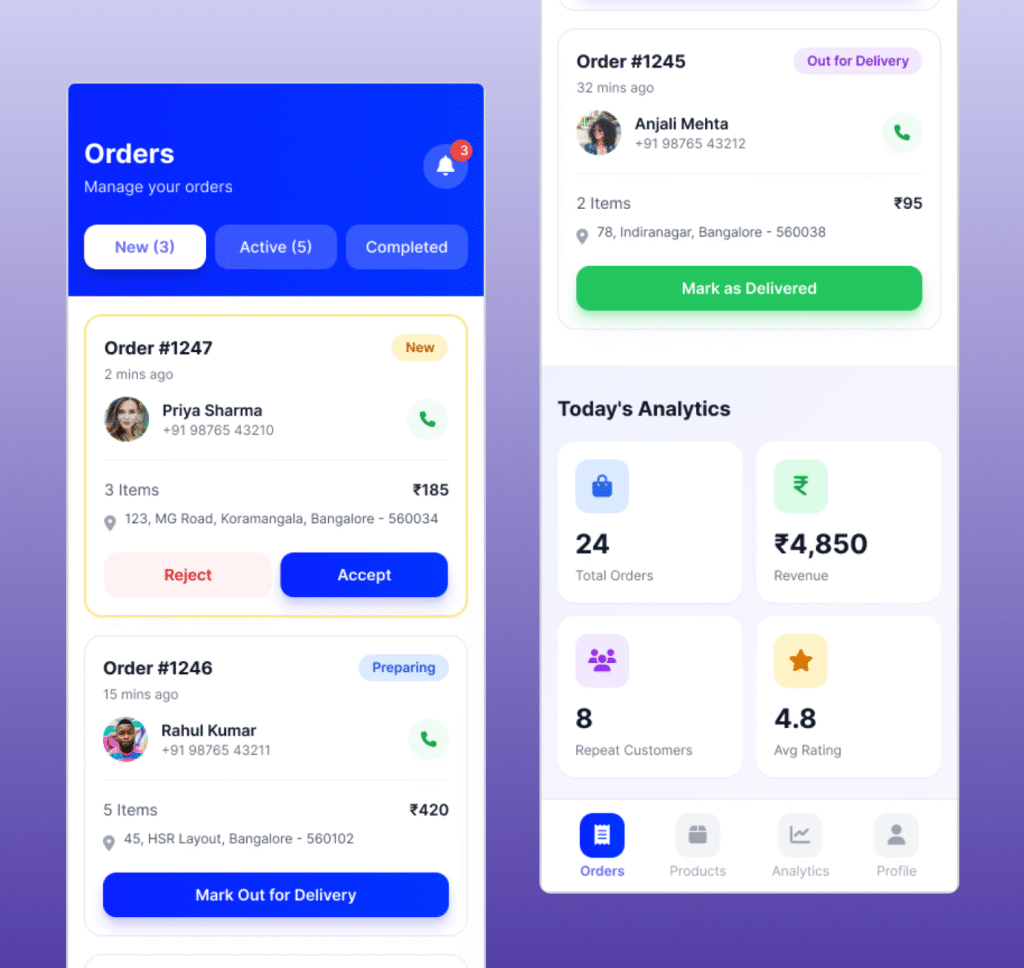
Zuvy is an AI-powered digital ecosystem designed to empower India’s micro and small businesses. As the Lead Product Designer, my responsibility was to conceptualize, design, and validate a scalable platform that makes digital transformation accessible for millions of merchants, distributors, agents, and customers.
The goal:
Digitize every local shop in India and create a hyperlocal marketplace powered by AI, visibility, and real-time data.

Details
Role:
Lead Product Designer
Project name
Zuvy
Platform:
Mobile App + Web Dashboard
Tools
Figma, Photoshop, Invision, Milanote, Notion, Illustrator
Involvement:
Visual Design, UX Research, Wireframing
Problem Statement
India has 63+ million MSMEs, but:
- 90% have no digital presence
- 70% still rely on cash books, diaries, and memory
- 95% cannot access advanced tools like CRM, ads, or analytics
- Many platforms are complex, expensive, or require technical knowledge
Merchants need:
- Simple onboarding
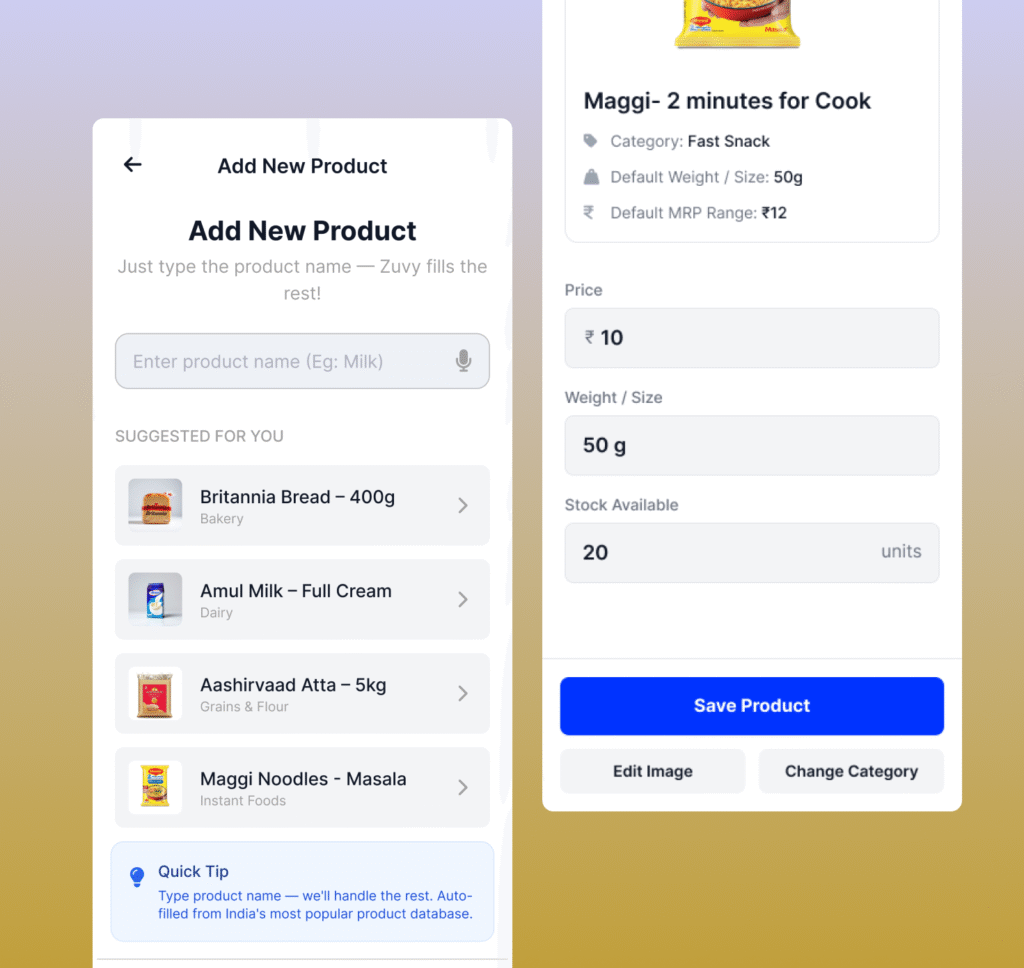
- Voice-driven interactions
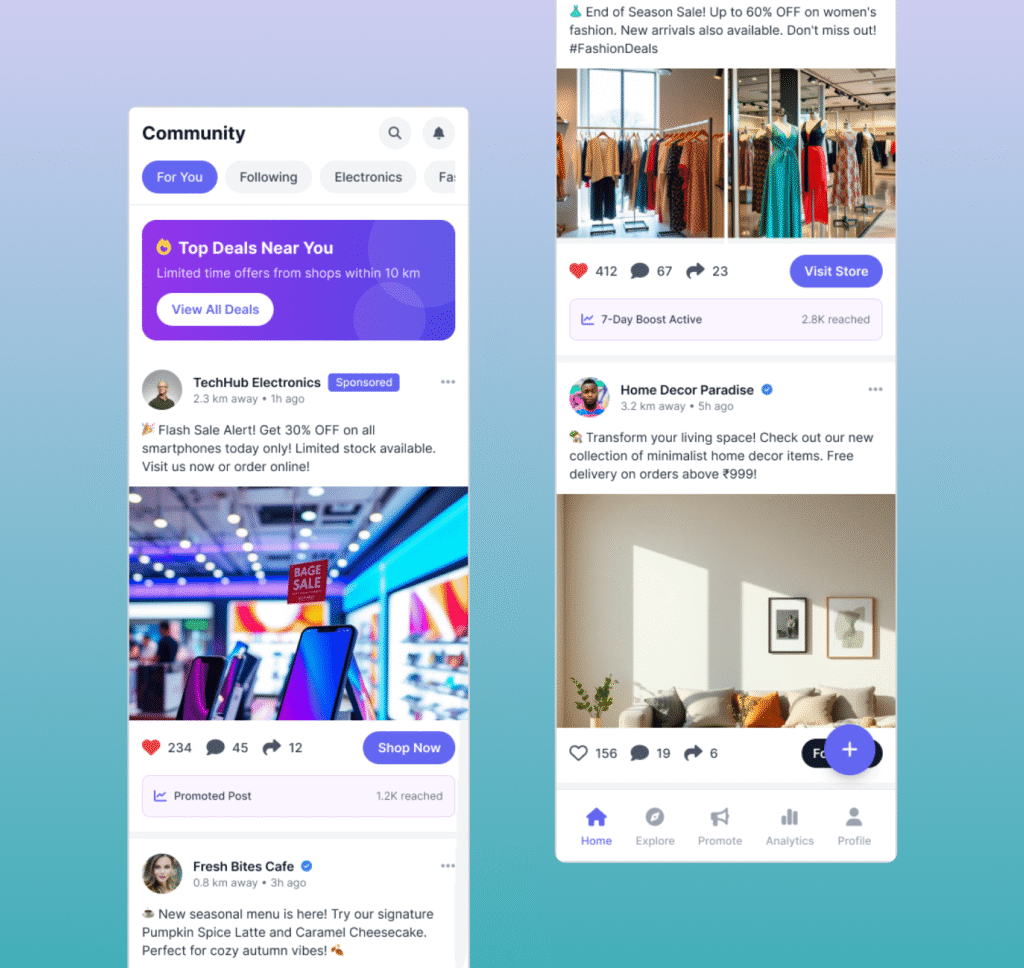
- Visibility within their locality
- Inventory + sales management
- Customer reach without paying heavy commissions
- A platform that supports local delivery
- Zero-friction digital adoption
- This shaped our product direction.
The Opportunity
The rise of:
- Voice AI adoption (35–40% YoY growth in India)
- ONDC ecosystem
- Smartphone penetration in Tier 2–6 cities
- Government push for digital MSMEs
- Demand for hyperlocal commerce
- created a massive opportunity to build the SME Super Platform for India.
This gives players a clear roadmap instead of confusion.
My Role as Lead Product Designer
Strategic Responsibilities
- Product vision shaping with founders
- Information architecture for 8 personas
- Roadmap alignment with tech & business teams
- Research-driven design decisions
Design Responsibilities
- User research & persona mapping
- Process flow, journey mapping, task analysis
- Interaction design (mobile + web)
- Creating reusable design systems
- Prototypes (low-fi to high-fi)
- Usability testing & iteration
Collaboration
- Worked with PMs,CTO, engineers, AI team, marketing, and founders
- Conducted weekly design reviews
- Ensured consistency across dashboards & apps
Understanding User Personas
Zuvy has one of the most complex ecosystems.
I defined 8 core personas, including:
- Distributor
- Merchant
- Local Agent / BDE / BDM
- Regional Manager (RM)
- Zonal Manager (ZM)
- HQ / Admin
- Ops & Finance Team
- General Visitor / Customer
Each persona has unique goals, permissions, and workflows.
This shaped the entire IA and navigational model.
Design Challenges
1. Low digital literacy
Solution:
Voice-first design, reduced cognitive load, simplified screens.
2. Complex business logic
Solution:
Created hierarchical dashboards, persona-based permission layers, and simplified workflows.
3. Hyperlocal discoverability
Solution:
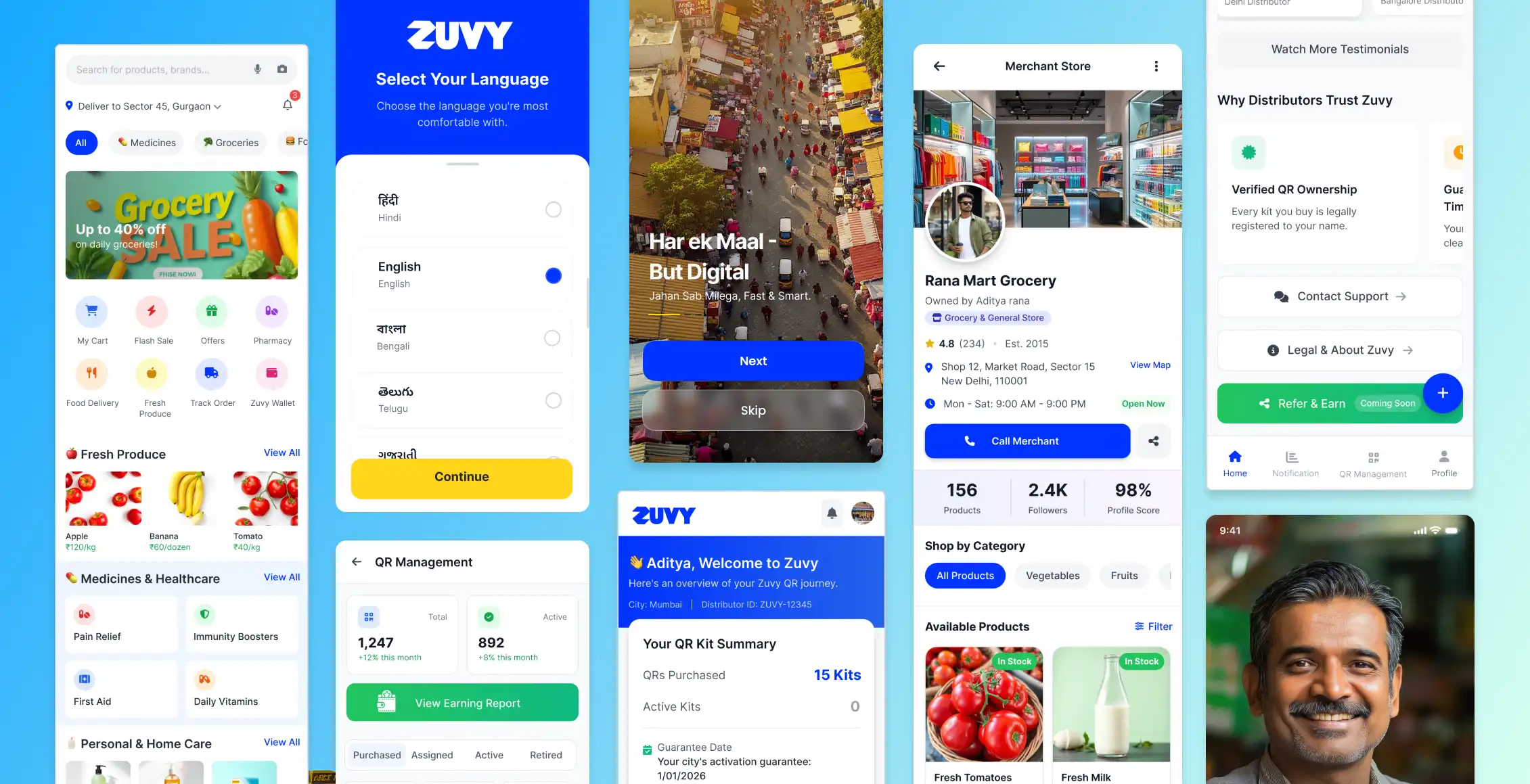
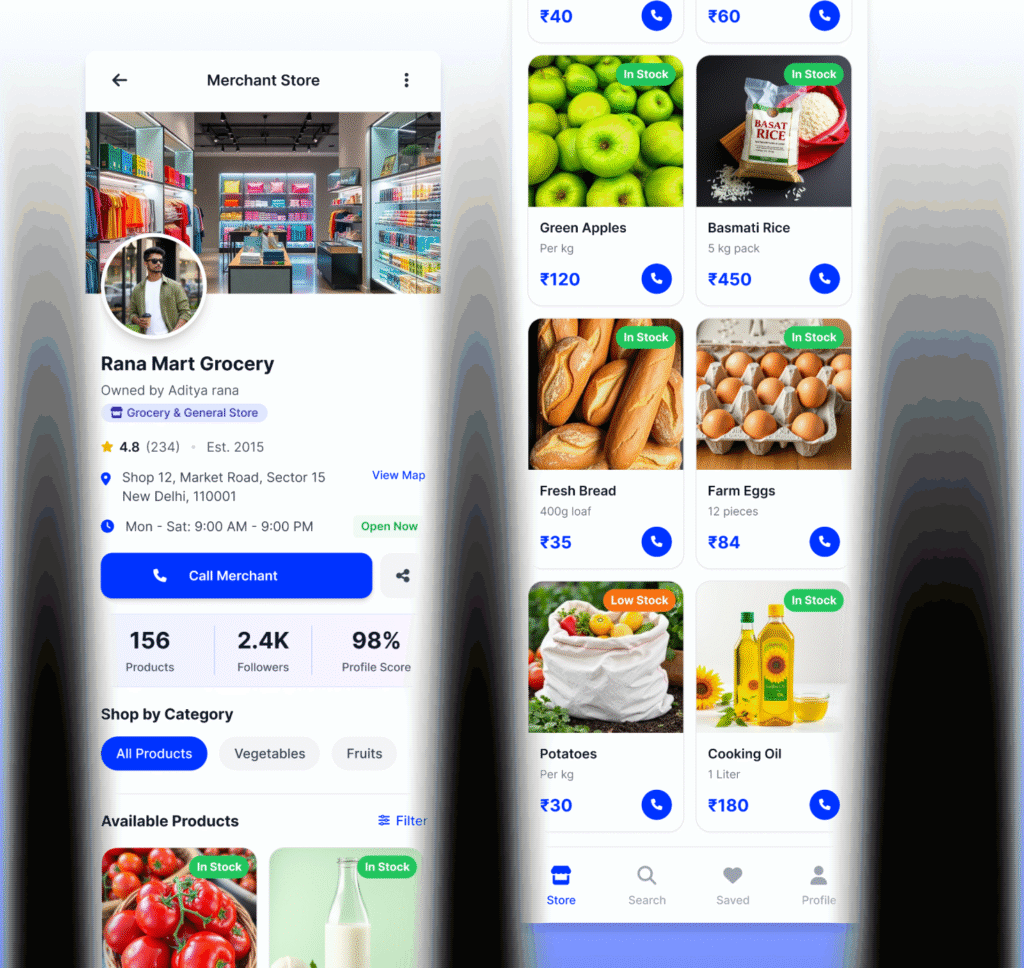
Built merchant storefronts similar to Instagram + Maps.
4. Trust-building
Solution:
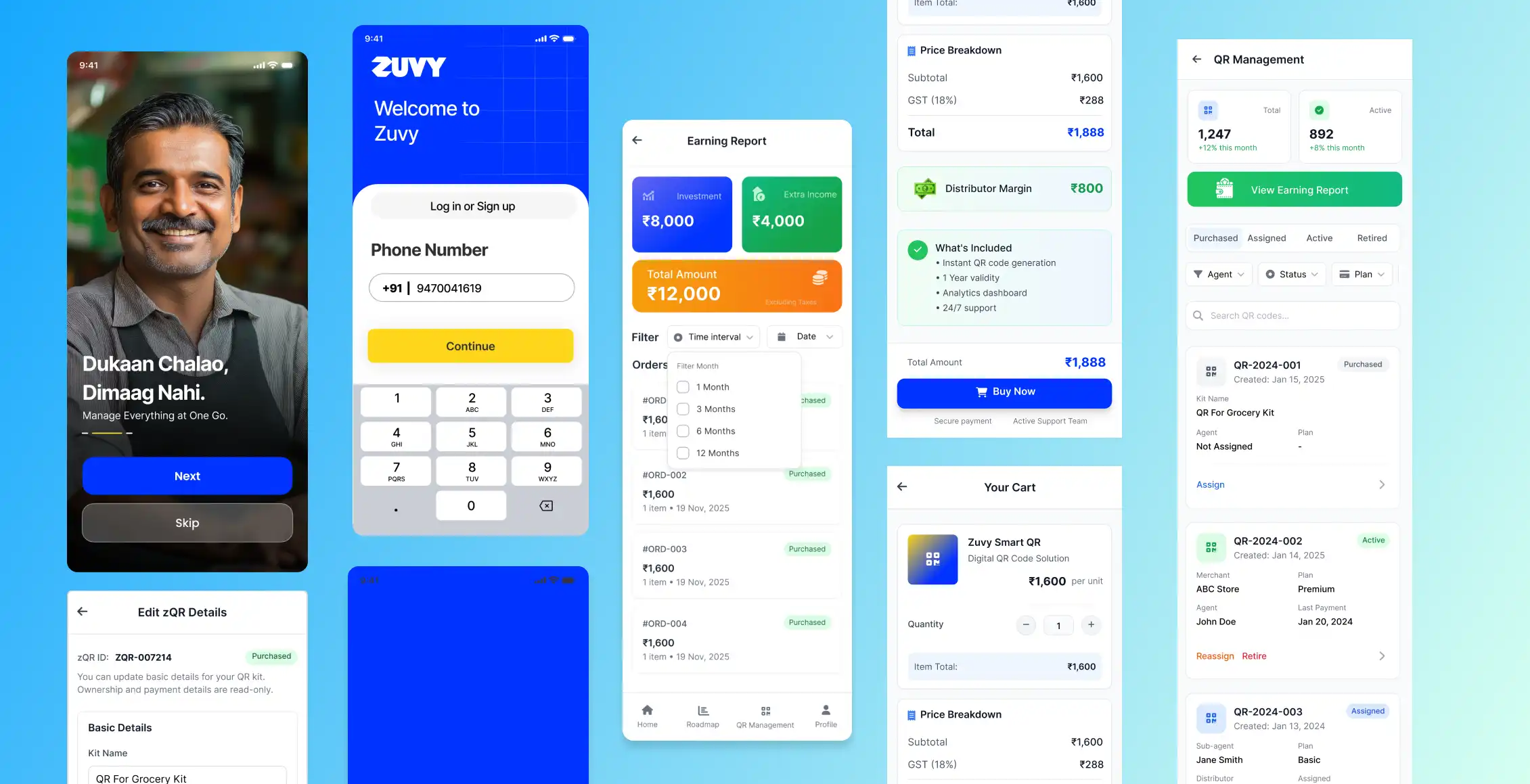
Testimonial screens, legal surfaces, proof interfaces, QR lifecycle transparency.
5. Scalability
Solution:
Atomic design system, modular components, scalable grids.
Research Insights
Zuvy has one of the most complex ecosystems.
I defined 8 core personas, including:
From merchant interviews:
- They want visibility, not complex tech
- They prefer voice input over typing
- They want calls, not online payments (initially)
- Trust is built through proof, not features
- Simple onboarding determines adoption
These insights shaped the MVP.
Designing the Product Roadmap
Phase 1 — Merchant Digital Storefront
Phase 2 — Voice-Led Sales Management
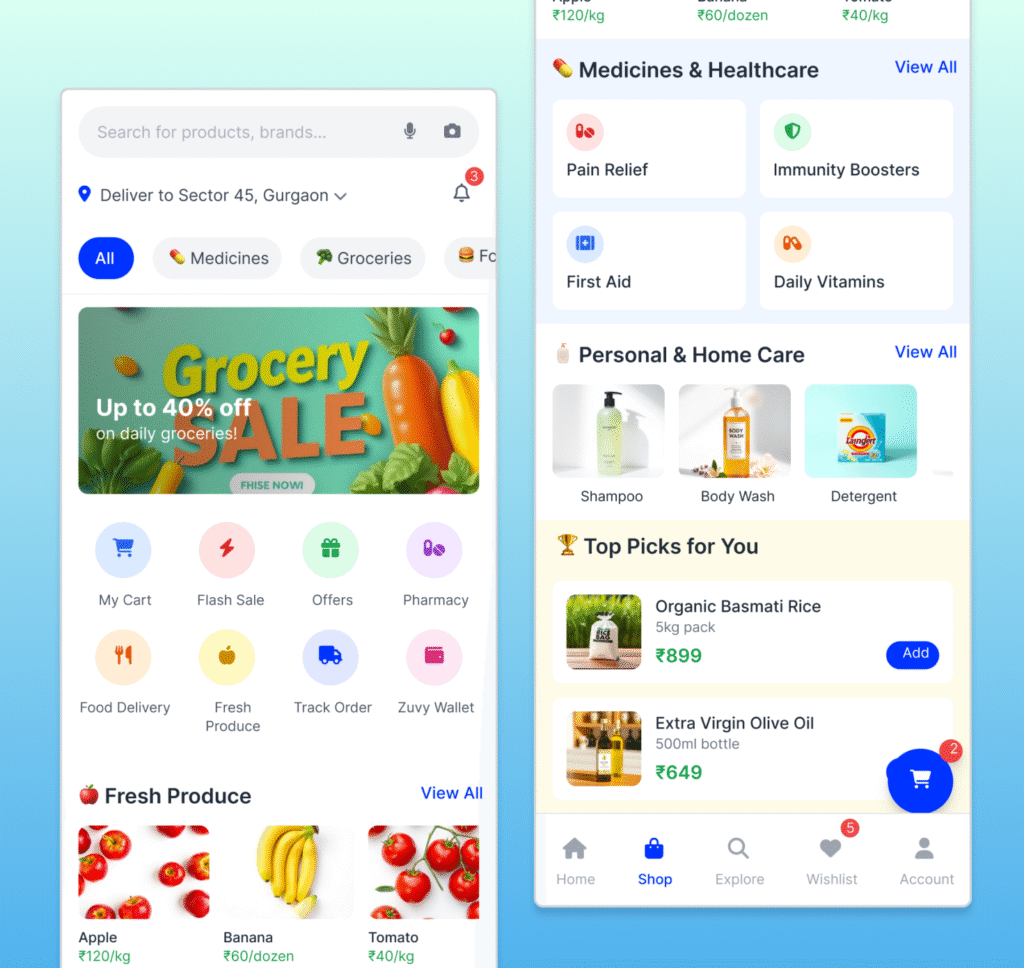
Phase 3 — Customer App (10km Hyperlocal Discovery)
Phase 4 — Add-to-Cart + Local E-commerce
Phase 5 — Paid Advertising Marketplace